Seneca Rocks Before the Leaves
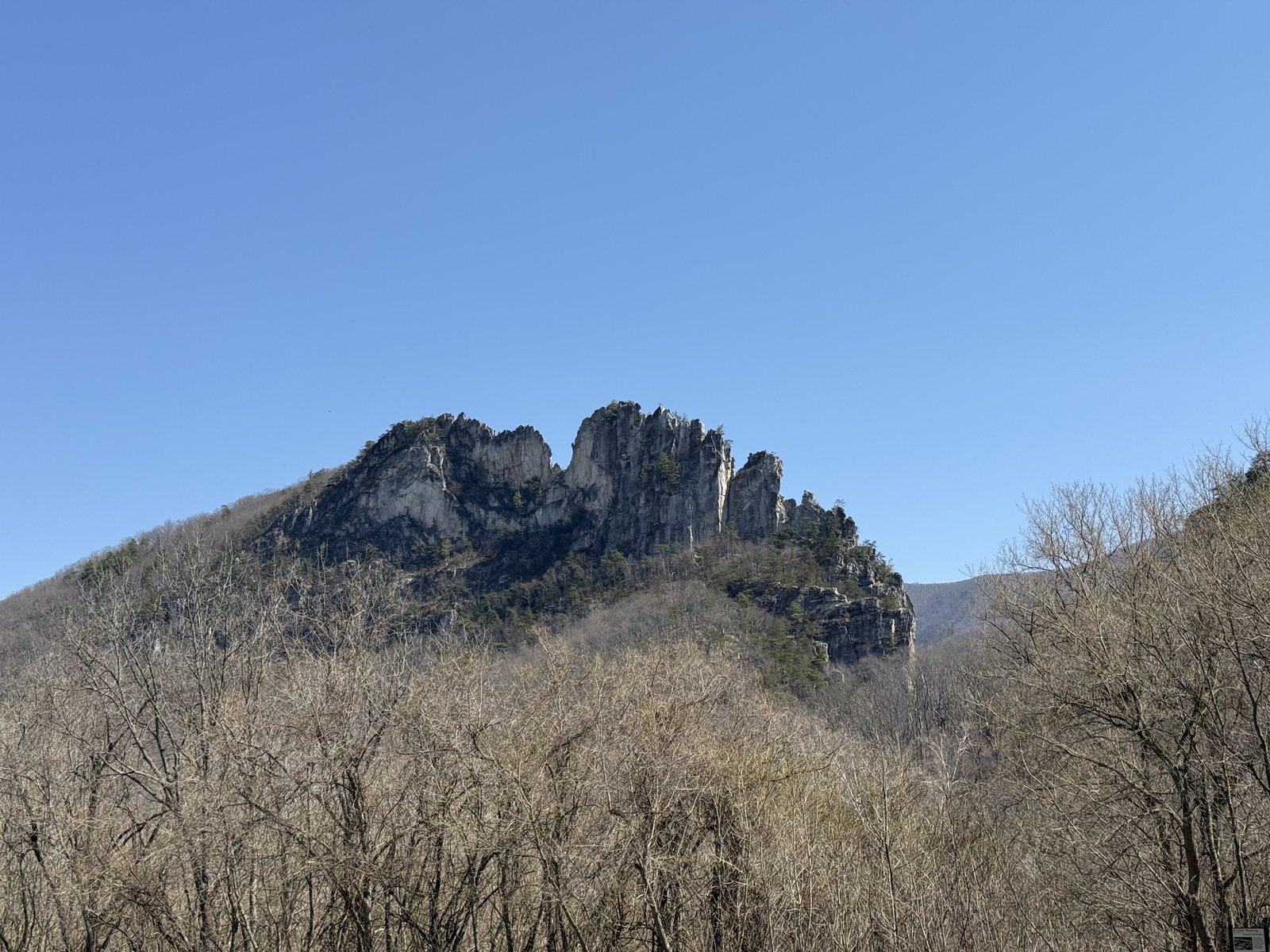
Some places you want to catch with the leaves down. Seneca Rocks is one of them. I came out in the middle of March, well before the forest had any intention of waking up, and that was the whole idea. For a few weeks each spring the trees stand bare and the great rock shows itself completely, every fin and ledge of it clear against the sky. Come back in May and the green closes in and softens the view. In March there is nothing in the way.
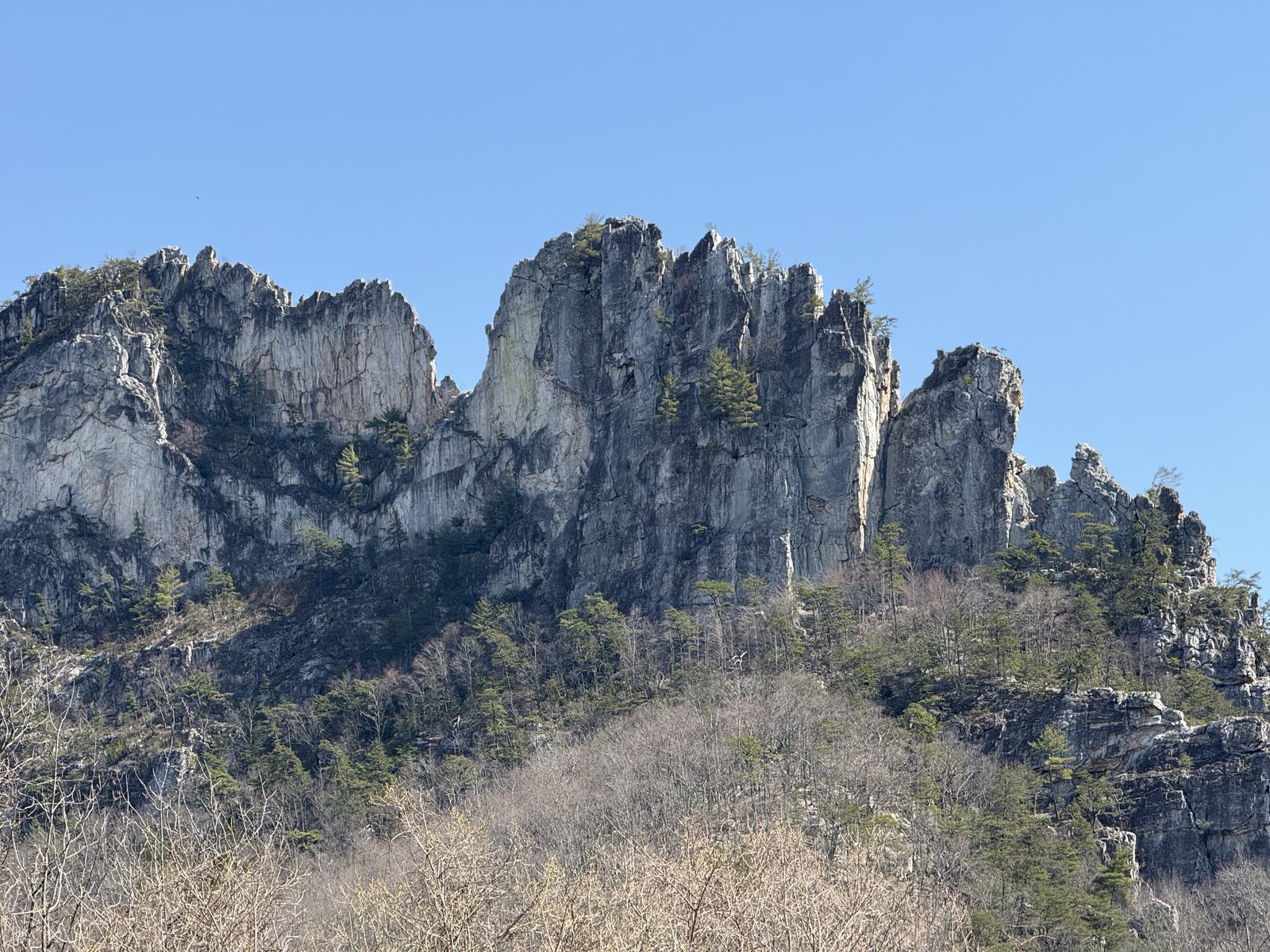
Seneca Rocks is a razor of Tuscarora quartzite standing nearly 900 feet above the valley floor, in the Spruce Knob–Seneca Rocks National Recreation Area of the Monongahela National Forest . The rock is old seafloor sand, hardened and then tilted up on end by the same long collision that built the Appalachians, so that what was once a flat beach now stands almost vertical. It is one of the best-known traditional climbing crags in the East, and its true summit is one of the few peaks in the region you cannot reach without a rope.
I was not climbing today, just walking up to look. The Seneca Rocks Trail runs about a mile and a half up the back side of the formation through a series of switchbacks, gaining a little over 800 feet to an observation platform near the north end. It is a steady climb but not a hard one, and benches are set along the way for catching your breath. In summer the trail is shaded and busy. Today it was open to the sky and quiet, the canopy still just gray branches overhead, last fall’s leaves packed brown and damp on the tread.
Everything was still asleep. No buds had broken yet, no green showed anywhere in the understory, and the woods had that held-breath stillness that comes before spring really arrives. The birds were sparse and the insects not yet stirring. It is easy to think of early spring as a lesser season for a walk, but it has its own honesty. With the leaves gone you can read the whole shape of the land, the lay of the ridges, the run of the drainages, the bones of the trees. You see how the forest is built.
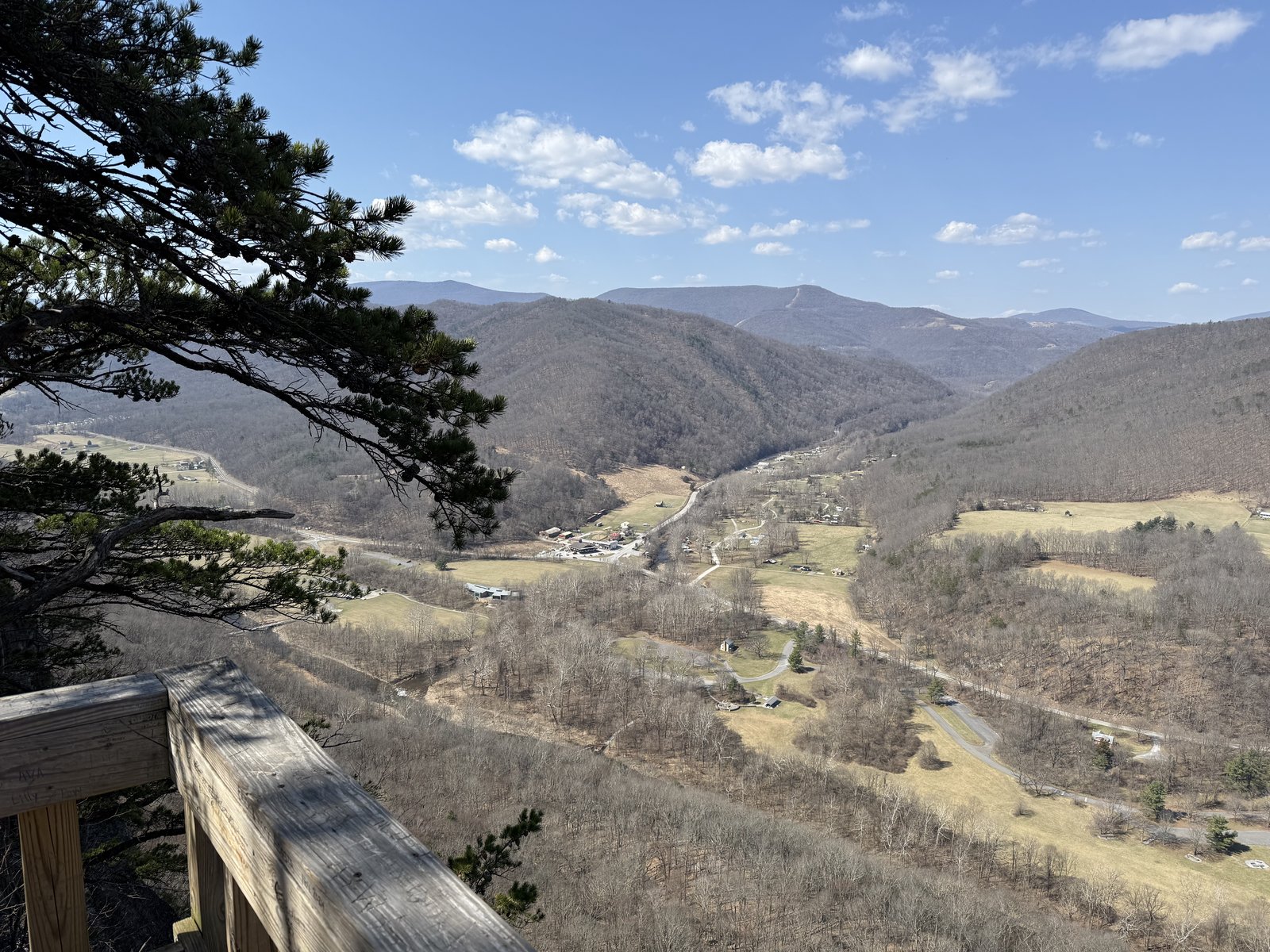
At the top the platform looks out over the valley where Seneca Creek meets the North Fork, and the village sits small below. The fields were still winter-brown, the far ridges a flat dormant gray-blue, the whole basin waiting. Off the other way the rock itself rose close and bare, the quartzite tilted up on end with a few stubborn evergreens rooted in the ledges, the only real green in the picture.
I stood up there a while in the cold clean air. In a month this will be a different mountain, leafed out and loud with migrants. Today it was stripped down and still, and there was something good about seeing it that way, before the leaves, while everything was still asleep.
All photos are original, taken on this hike.