Four Places in One at New River Gorge
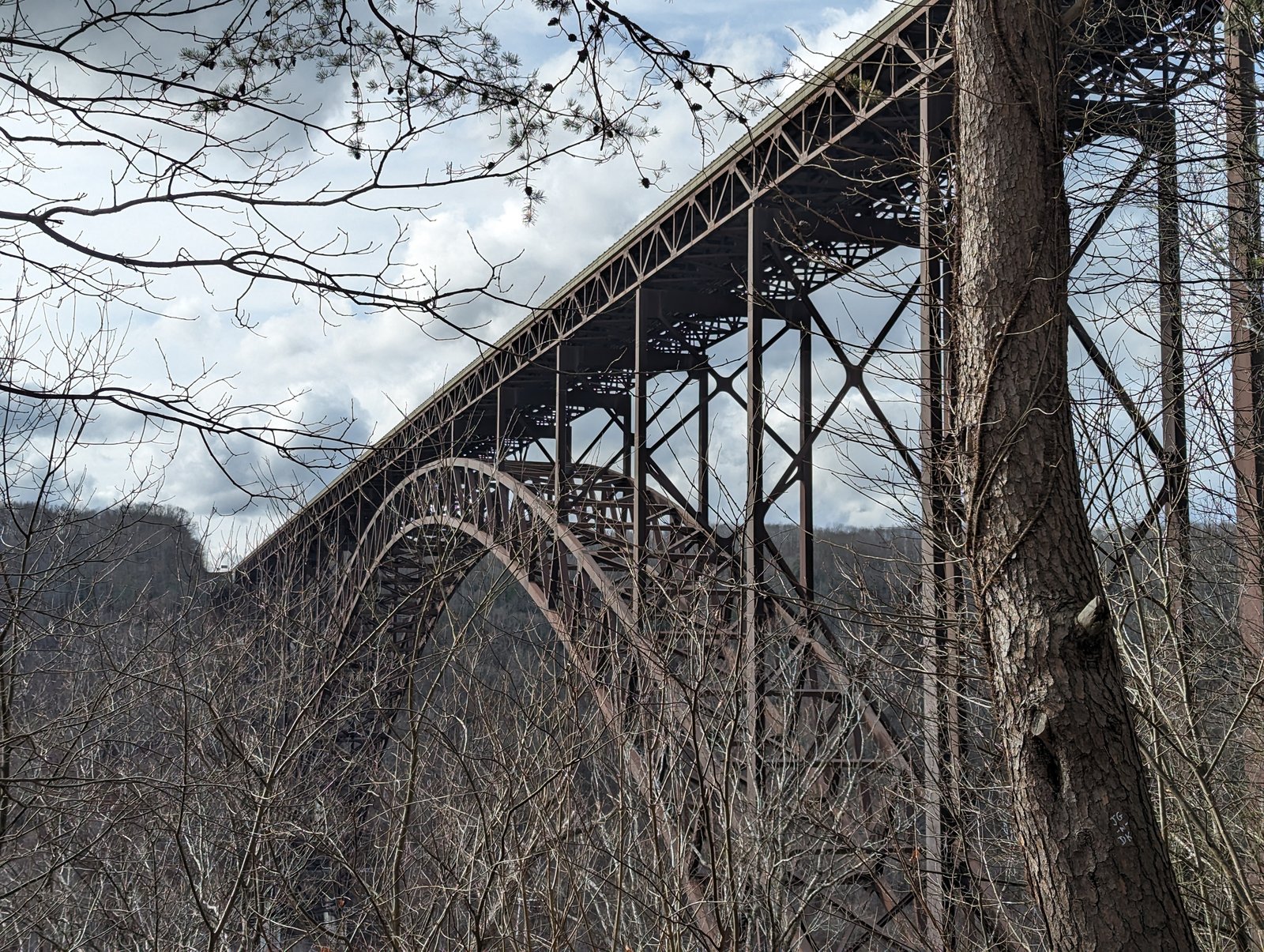
Most of what people picture when they hear New River Gorge is the bridge, that long steel arch over a thousand-foot drop. I drove in the evening before and caught it through the bare trees from the rim, dark against a gray January sky. It is worth the look. But the bridge is the easy part. The gorge itself, and the walking along its edge, is the reason to stay.
New River Gorge National Park and Preserve is the country’s newest national park, named in December of 2020, though the river had been protected as a National River since 1978. The name is one of the small jokes of geology. The New River is, by most reckonings, among the oldest rivers in North America, old enough to be cutting this gorge long before the mountains around it finished rising. It runs the wrong way too, north, draining up out of the Carolinas and Virginia into West Virginia. An old river doing old things, slowly.
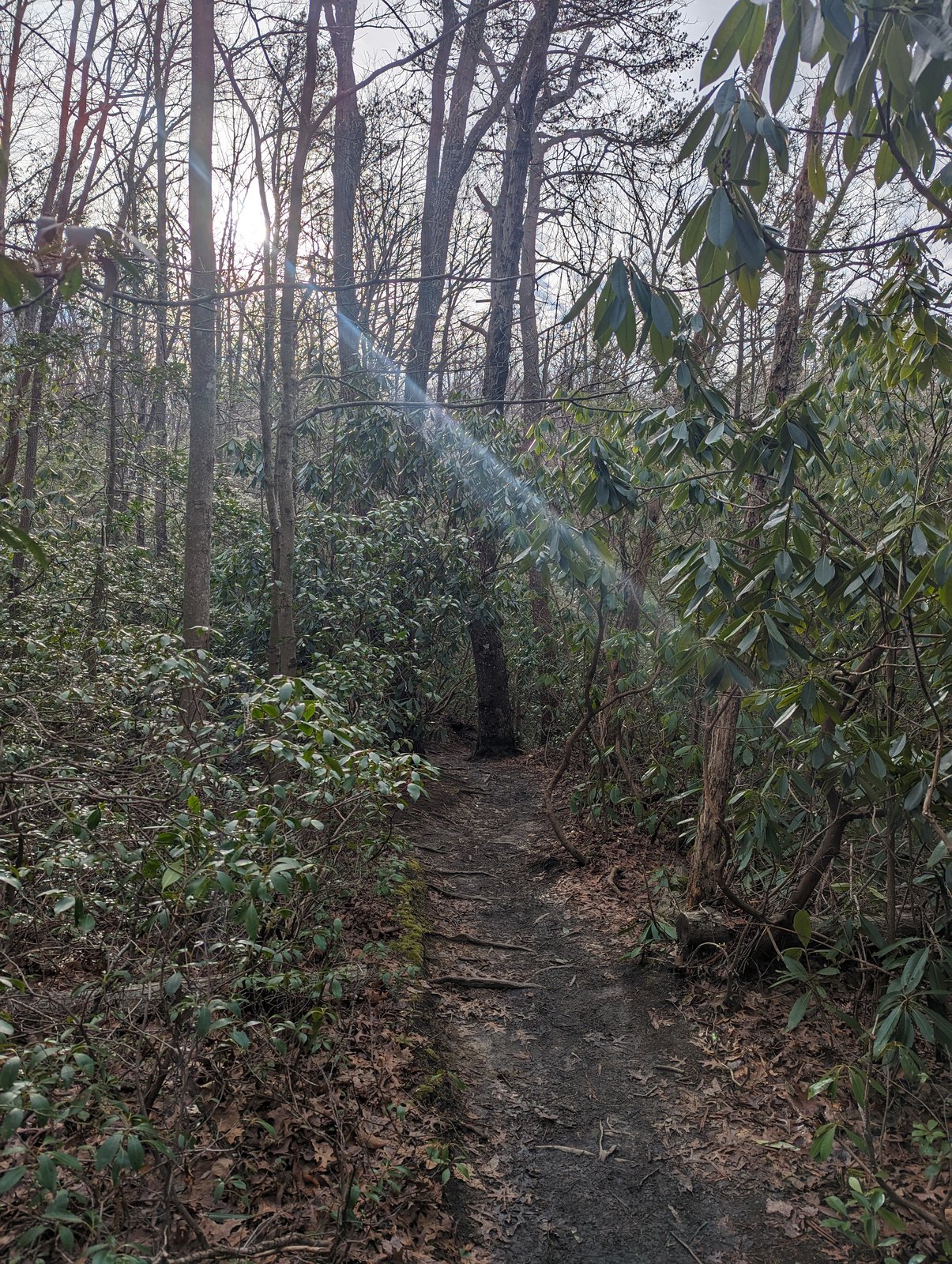
I came out today to walk the Endless Wall Trail , which runs along the top of the cliffs on the north rim. It is a little over two miles point to point, or a loop of about three if you walk the road back, with not much elevation to it. The name comes from the cliffs themselves, a nearly unbroken band of Nuttall sandstone that climbers come from all over for. The trail crosses Fern Creek early on and then settles into a long, quiet run through hemlock and rhododendron before the overlooks begin.
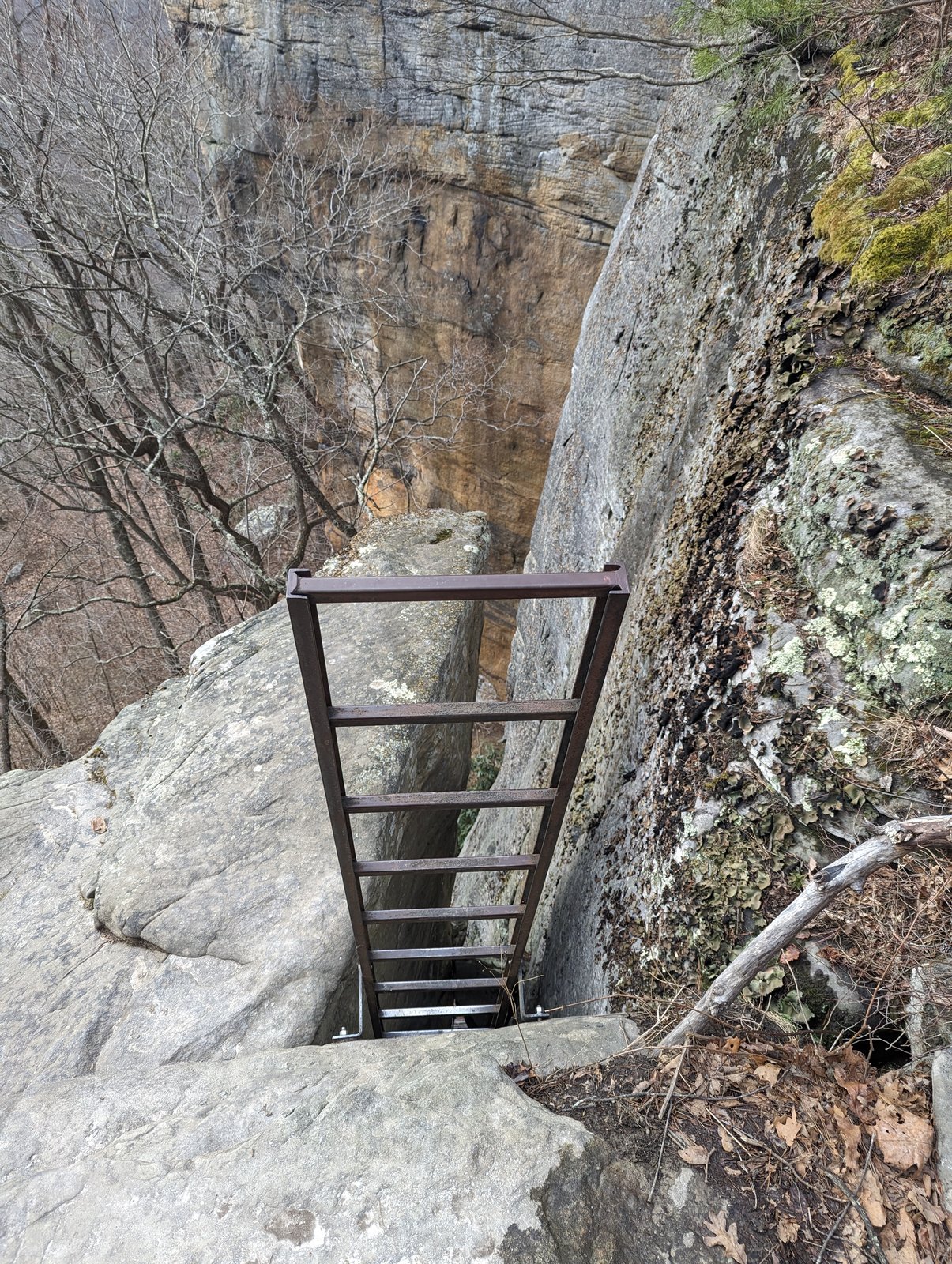
It was cold, in the low thirties, with the kind of thin winter sun that comes through the bare canopy in long slants. The rhododendron stayed green and glossy, the way it does all winter, and the path under it was packed leaves and frozen dirt. Partway along, a steel ladder drops through a cleft in the rock to the base of the wall, the way down for climbers in warmer months. I looked at it for a while and left it alone for the day.
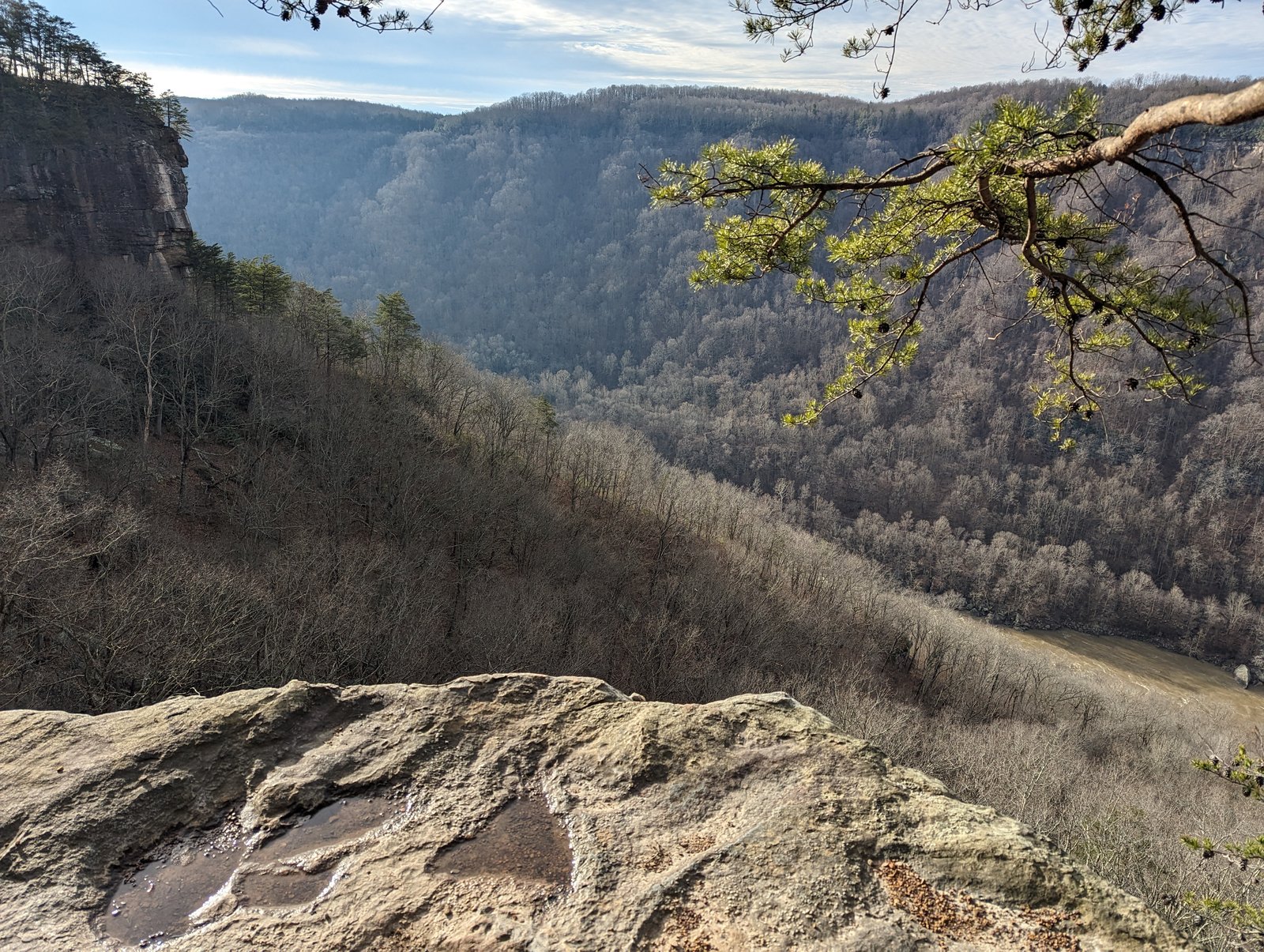
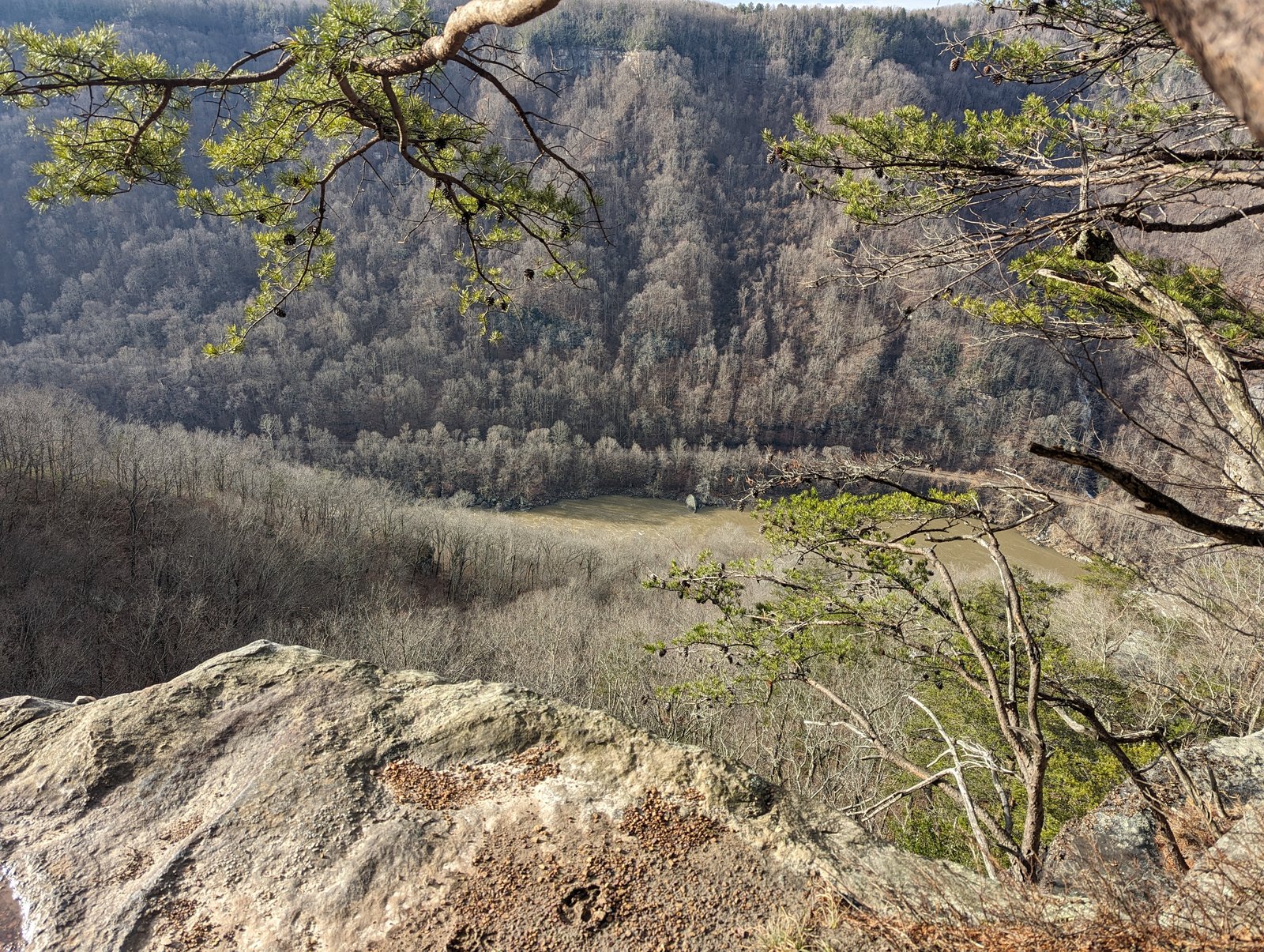
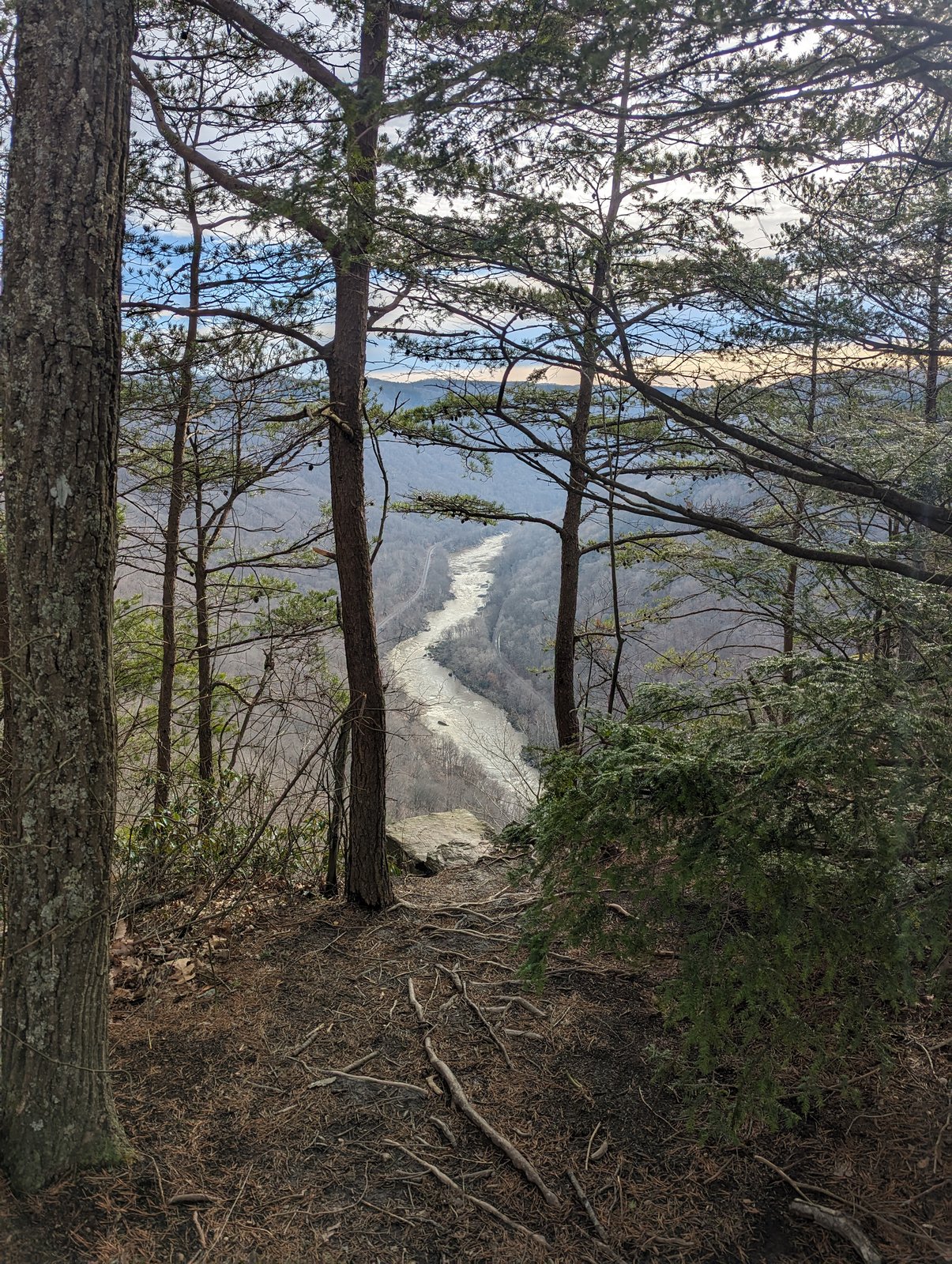
Then the trees give way to the rim, and the gorge opens up all at once. This is the thing about coming in January. With the leaves down, you can see everything. The far wall stands clear across the gap, cliff faces I would never spot in July. The river shows itself at the bottom, a pale ribbon through the bare bottomland, where in summer it hides under a closed roof of green. The overlooks here, near what they call Diamond Point, give you the whole sweep of it, and in winter there is nothing in the way.
I have been thinking, walking these cold rims, about how much a season changes a place. Come back to this same trail in July and it is a different walk entirely. The canopy closes overhead into a green tunnel, the rhododendron blooms pink and white and crowds the path, and the overlooks that today show fifty miles of open country will show you a soft green wall instead, closer and warmer and just as good in its own way. In October the whole gorge turns to fire. In April it is mud and the first ephemerals. The four seasons can make a single place feel like four places, and I think that is reason enough to keep coming back to the same trails rather than always chasing new ones. You never really finish a place. You just see another version of it.
Today’s version was the bare-boned one, all rock and river and long cold light. I stood at the edge a while, watched a crow work the updrafts along the wall, and turned back the way I came. The gorge will still be here in summer, looking like somewhere else.
All photos are original, taken on this hike.