A Piece of Canada at Cranberry Glades
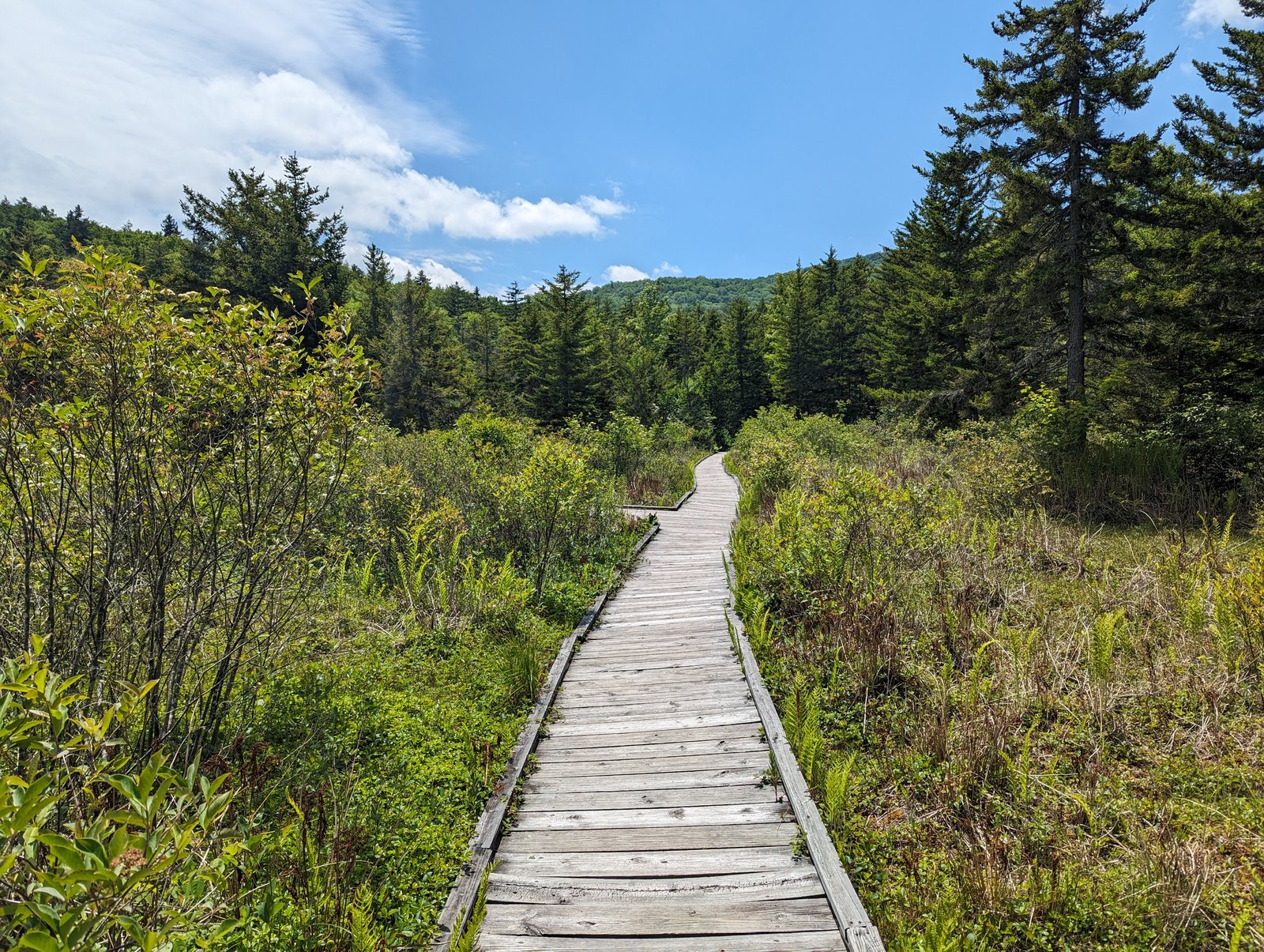
There is a place in the West Virginia mountains where, if you closed your eyes and opened them again, you might think you had driven a thousand miles north. The Cranberry Glades Botanical Area , tucked into the Monongahela National Forest , is the largest area of bogs in the state, a stretch of open peatland that belongs more to Canada than to Appalachia. I came out on a mild June morning to walk it slowly.
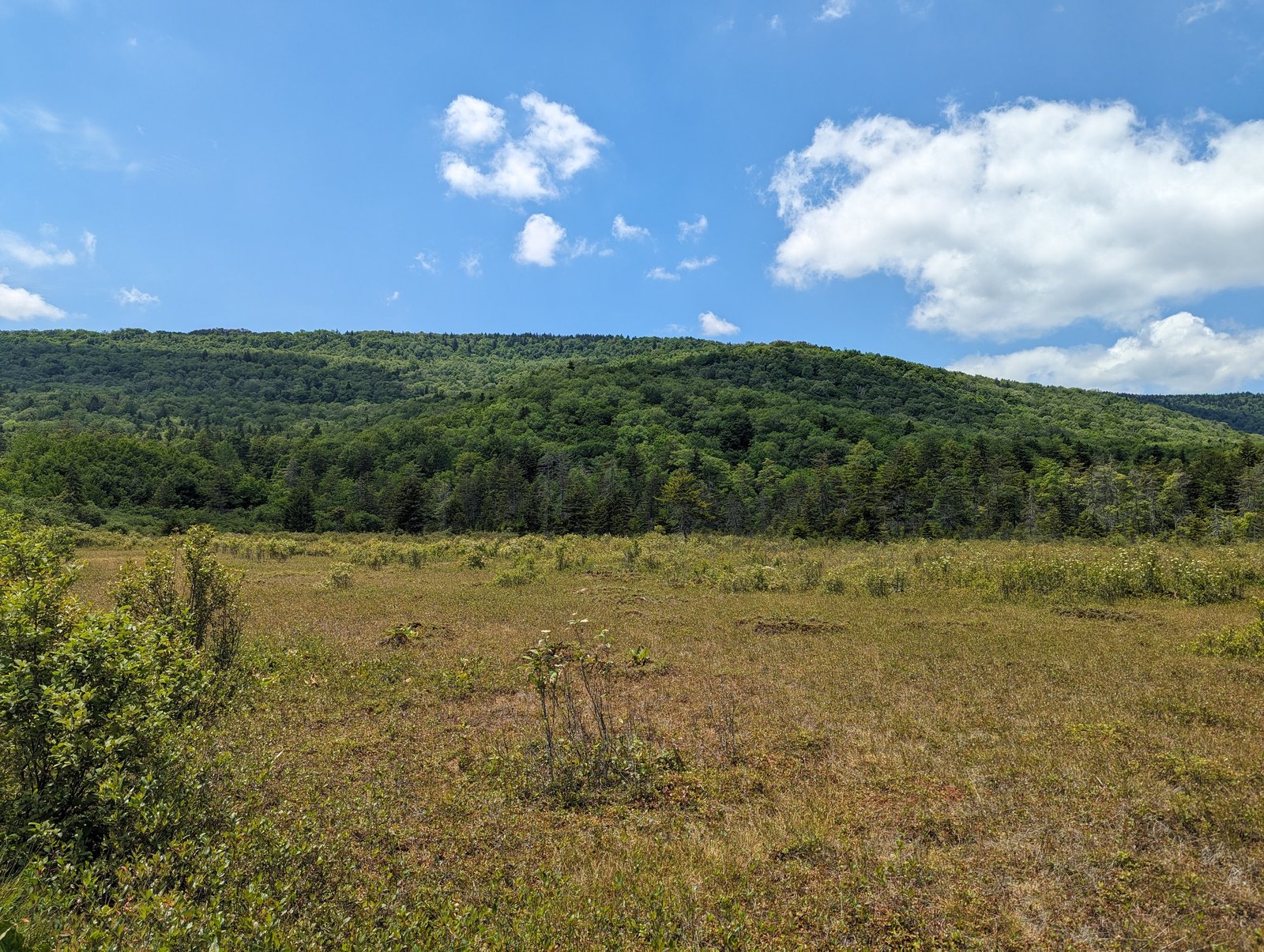
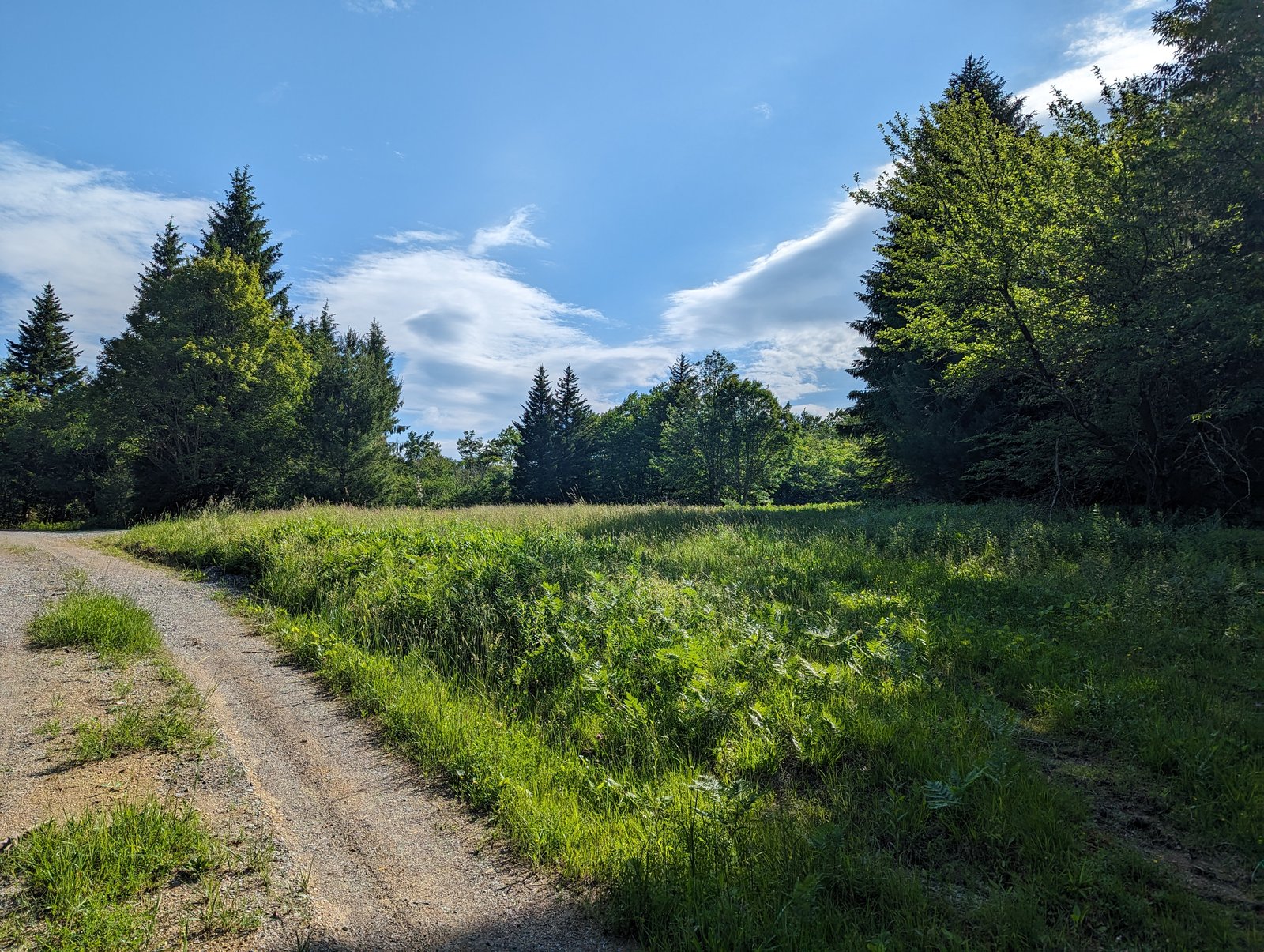
What makes this place so unusual is that, in climate and in ecosystem both, it has far more in common with central Canada than with the rest of West Virginia. The glades sit in a high basin at around 3,400 feet, where four streams come together and the cold air settles and pools. That cold is the whole story. When the last glaciers retreated north some ten thousand years ago, they left behind the plants that liked it cold, and here, in this frost pocket, those plants simply stayed. The result is a piece of the far north stranded in the southern mountains, a bog of sphagnum moss and sedge, of cranberries and carnivorous sundews, ringed by dark red spruce. It is the headwaters of the Cranberry River, and the source of its tea-colored, acidic water.
You walk it on the Cranberry Glades Boardwalk Trail , an easy half-mile loop of weathered planking that keeps your boots off the fragile peat and keeps the peat safe from your boots. The boardwalk is the right pace for a place like this anyway. You cannot hurry across it without missing the point. The sphagnum holds water like a sponge, layers of it building up over thousands of years far faster than it breaks down in the cold, and the whole surface gives a little underfoot even from the planks.
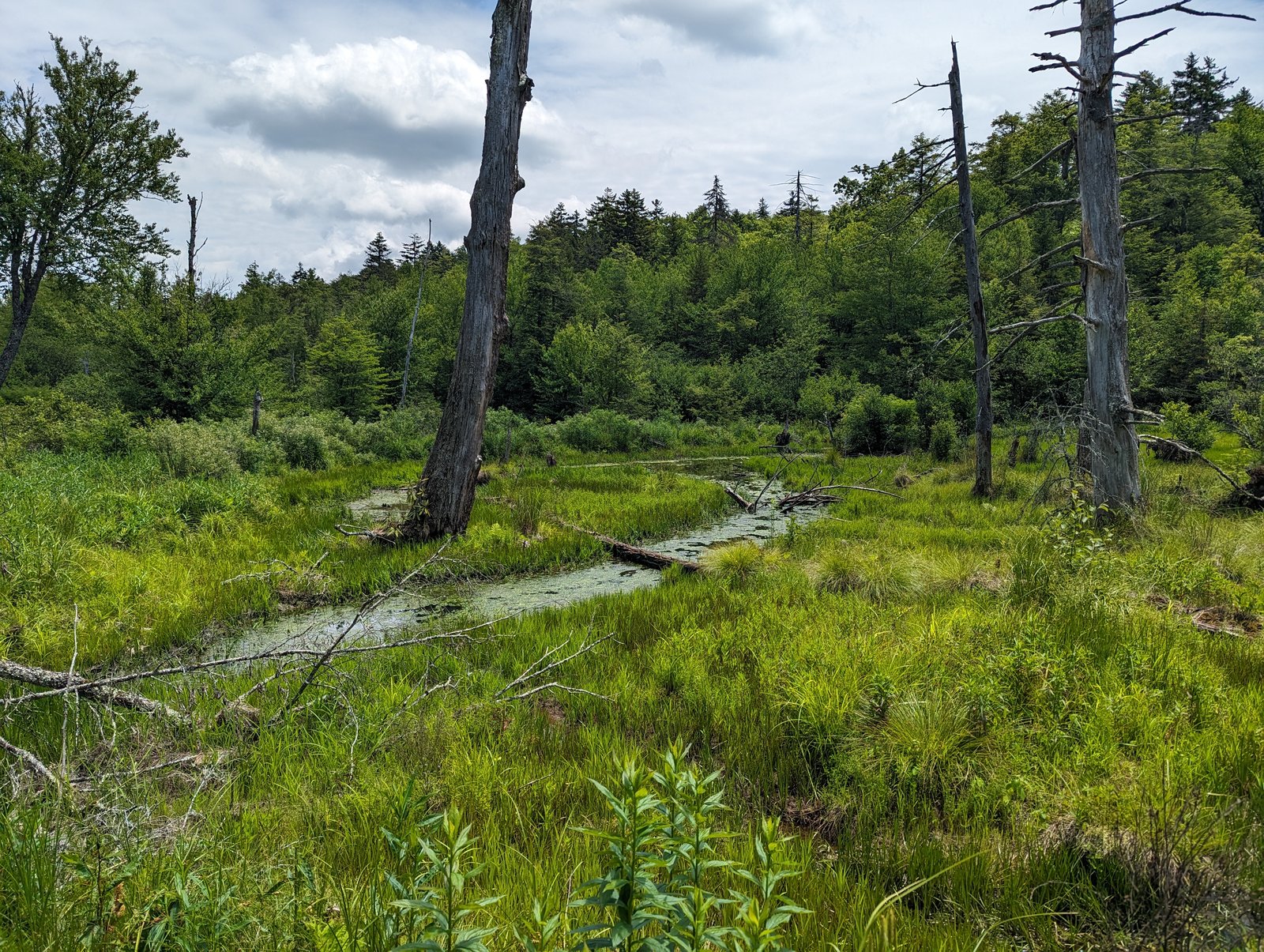
I took my time. Off to the sides the open bog ran out toward the spruce, the sedge already going a soft reddish color in patches. A slow channel of dark water wound through the grass past a stand of dead snags, the kind of quiet wet ground that herons and beavers like. The carnivorous plants are here too, the sundews and the purple pitcher plants that make their living trapping insects because the bog itself is too poor and too acidic to feed them any other way. It is a strange, ancient kind of ingenuity, and easy to walk right past if you are moving fast.
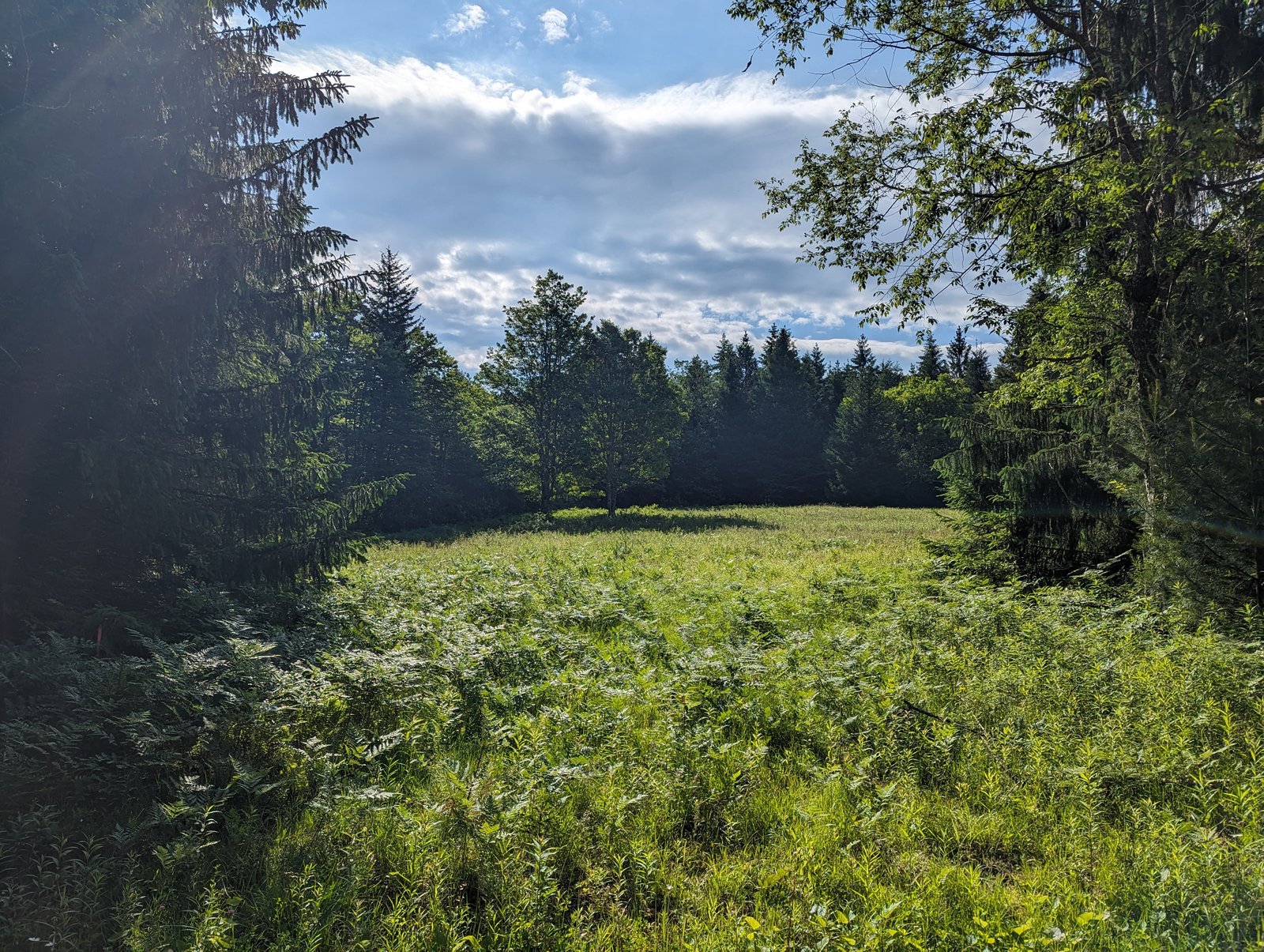
The birds here lean north as well. This is one of the few places this far south where you can find species more at home in the spruce forests of Canada, and the spruce ringing the glades is the giveaway. I stood at the edge of the boardwalk a long while just listening.
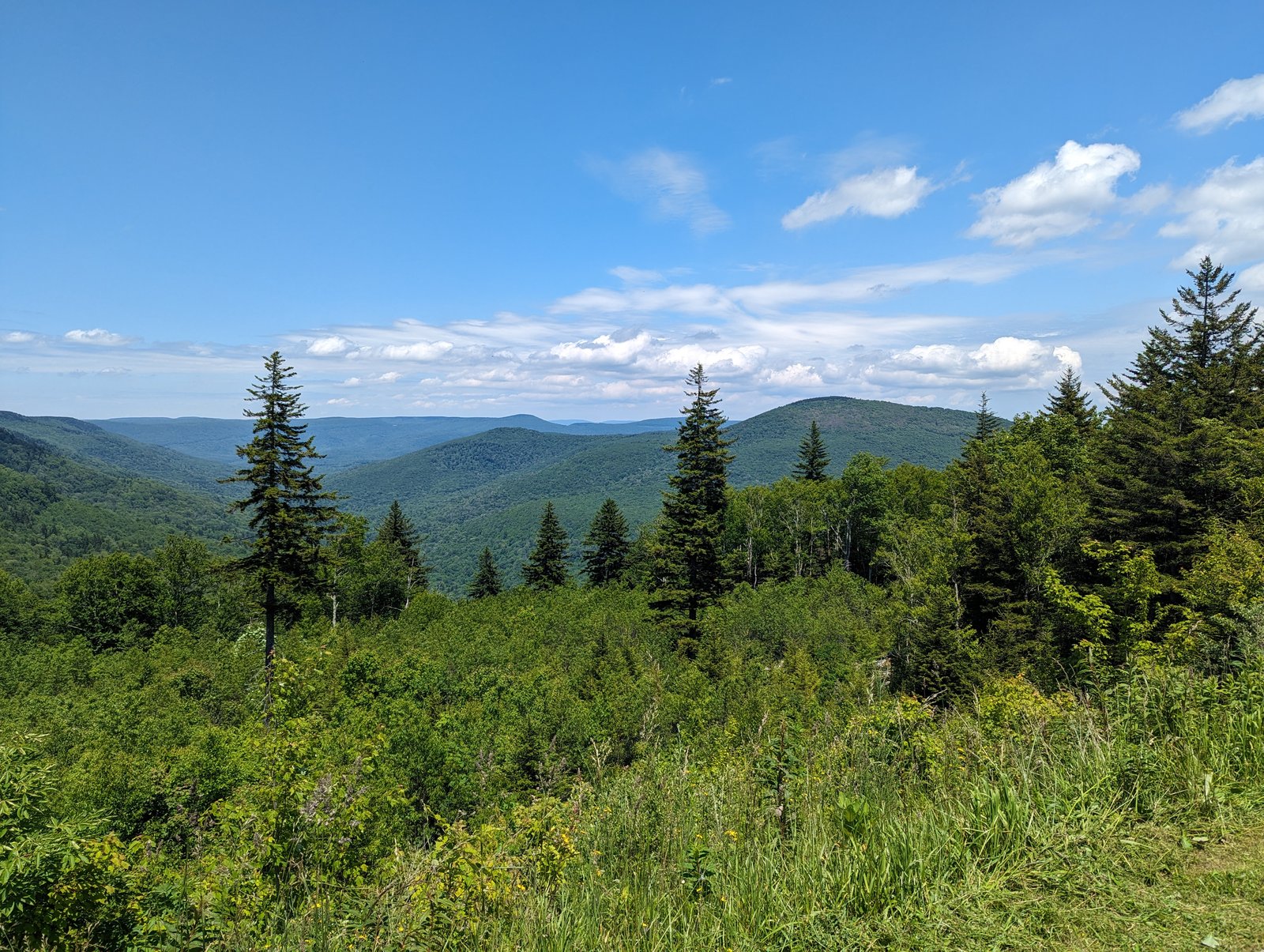
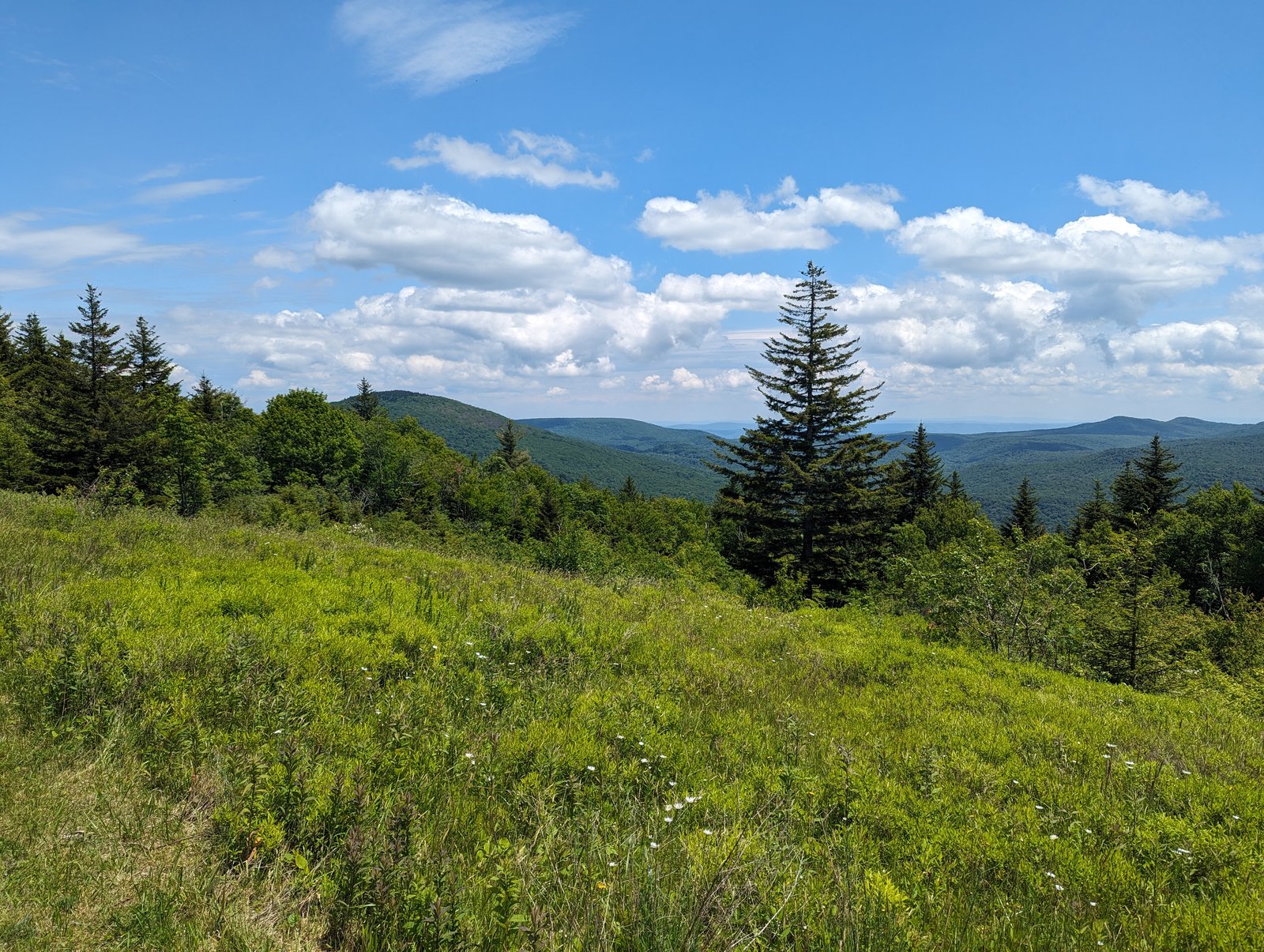
On the way out I drove a stretch of the Highland Scenic Highway , which climbs along the ridges nearby and pulls off at a few high overlooks. From up there the mountains run out in layered blue ridges, with red spruce standing dark against the grass in the foreground. It is a good reminder of how high and how cold this corner of West Virginia really is, and why a piece of Canada could settle in down in the basin below and decide to stay.
All photos are original, taken on this hike.